
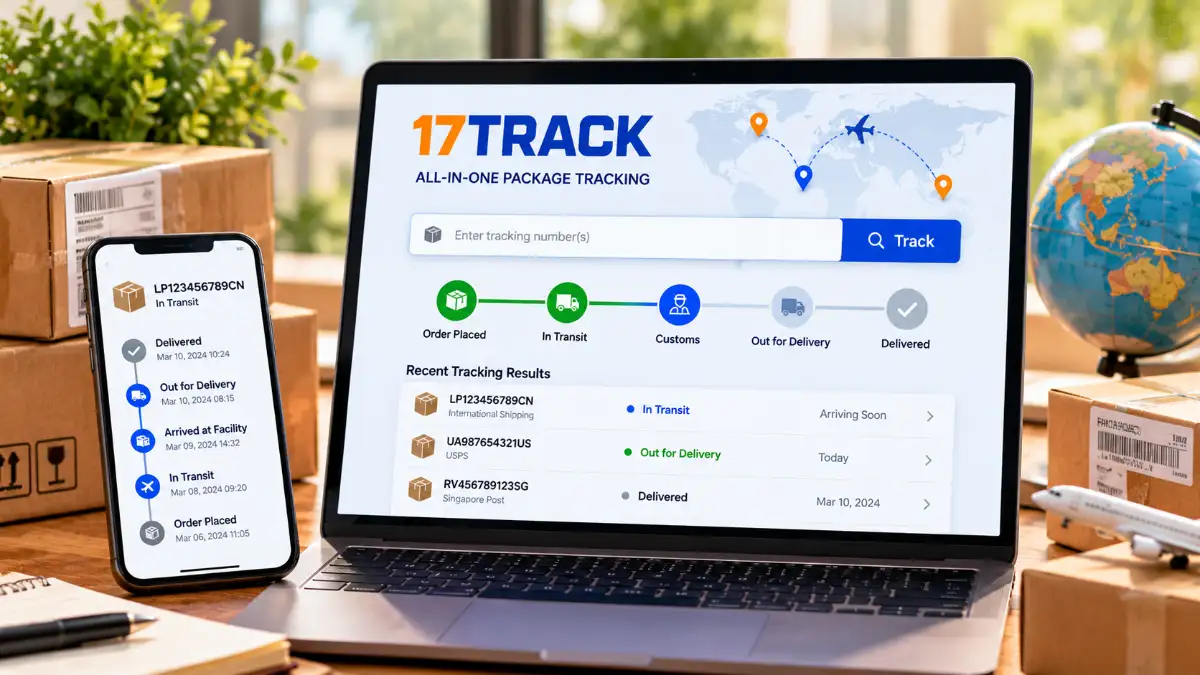
17Track is a legitimate shipment-tracking service, but a result on its website does not prove an online seller is trustworthy or that your purchase will arrive. The platform, called 17TRACK, displays tracking records supplied by shipping companies. It doesn’t inspect the contents of parcels, certify retailers, or deliver purchases itself. This matters when an unfamiliar shop sends you a tracking link, a shipping history seems inconsistent, or the page says Delivered even though nothing turned up. You can use the service while independently checking the merchant and carrier.
Is 17TRACK a Real Company or a Scam Website?
The official 17TRACK site is a real tracking platform. Its Help Center explicitly addresses scam concerns and explains that merchants can recommend the public service without being partnered with it.
That distinction answers two different questions. The tracker itself may be legitimate; the store that provided the tracking number may still be unreliable. A working tracking page isn’t a certificate of authenticity for the retailer, the product, or the delivery address.
What Does 17TRACK Verify?
The platform retrieves and organizes tracking events made available by carriers. Those events might show a shipping label, collection scan, airport departure, customs processing, delivery attempt, or completion notice.
17TRACK does not independently open parcels or confirm the item matches the product ordered. It also isn’t a real-time location service that can prove exactly where a box sits between scans.
Is 17 Track Accurate Enough to Trust?
For routine progress updates, it’s useful. But the quality and timing of results depend on the shipping companies supplying the underlying information. A quiet tracking history might reflect a long transport leg, missing scans, a carrier handoff, or temporarily unavailable data.
The 17TRACK tracking instructions explain that carrier detection is generally automatic but may require manual selection. An incorrect carrier choice can therefore lead to confusing results.
For any serious dispute, compare the tracking history with the official carrier’s website. The carrier is usually better positioned to investigate a physical delivery problem or explain the details of its own scans.
How a Fraudulent Seller Can Misuse Tracking Information
A dishonest retailer might send a number that belongs to another shipment, provide a label number before tendering the parcel, or offer vague explanations when tracking stops changing. These are possible warning signs, not proof that a specific seller committed fraud.
A legitimate tracking site can display events for a genuine package while the order you’re waiting for remains unresolved. That’s why you should not treat a Delivered label as conclusive evidence that the seller completed its obligations to you.
Warning Signs Worth Investigating
Be particularly cautious when several of these occur together:
- The merchant’s contact information cannot be verified.
- Prices are unusually low, and the listing makes implausible promises.
- The tracking number predates your order or appears unrelated.
- The seller won’t disclose which carrier accepted the parcel.
- You receive contradictory shipping explanations.
- The store demands unusual additional payments through unsolicited links.
- A delivery is claimed, but the responsible carrier cannot help reconcile it.
The FTC’s online shopping guidance recommends researching unfamiliar stores, checking refund terms, and keeping purchase documentation.
What to Do When 17TRACK Says Delivered, but You’re Missing the Package
Verify the Last-Mile Carrier
Find the actual delivery company in the tracking history. Visit its official website directly rather than relying on an unexpected text-message link. If there is a second local tracking number, search that too.
Check Likely Delivery Locations
Look around the front and side entrances, mailbox, parcel locker, reception desk, or another sheltered place. Ask others in your household whether they brought the parcel inside.
Ask the Carrier to Investigate
If nothing is there, contact the carrier through its official support channel. Ask how to report an apparently completed but missing delivery.
Tell the Merchant What Happened
Send a concise written explanation with your order number, delivery claim, and carrier response. Ask the seller to investigate and explain its proposed resolution. Keep copies of what you send and receive.
Can You Get a Refund for an Undelivered Order?
Depending on how you paid and the circumstances, yes. Start with the merchant, but do not allow a prolonged exchange to make you miss a dispute deadline.
The Federal Trade Commission’s non-delivery guidance explains that certain credit-card billing errors must be disputed in writing within 60 days after the first statement showing the error was sent. Online or telephone disputes alone might not preserve every legal right. Check the issuer’s billing-inquiries address and requirements.
Debit-card protections differ. Contact your bank promptly to learn whether it offers a remedy. If you used a marketplace, also check the platform’s buyer-protection process and time limits.
17TRACK generally cannot issue a refund for merchandise sold by a separate retailer because it is not the seller or carrier.
Is It Safe to Enter Your Tracking Number?
Use the official website, 17track.net, and treat unfamiliar look-alike sites with caution. A tracking number may reveal shipment details, so avoid posting it publicly.
The company’s product privacy policy, effective June 23, 2026, describes how personal information is handled across its services. Read it if you’re concerned about data processing or plan to create an account.
Never assume a message is genuine because it contains a tracking link. If a text demands a password, payment-card details, or unexpected delivery fees, navigate independently to the carrier’s official site before taking action.
17TRACK or the Carrier: Who Should You Contact?
Use 17TRACK when your goal is to view events across multiple transportation networks or discover which company handles the parcel. Go to the carrier for an attempted-delivery notice, address change, pickup arrangement, or loss investigation.
Contact the seller about the merchandise itself: what was sent, whether the correct product shipped, and whether a refund or replacement is owed. If that process fails, follow the relevant marketplace or payment-provider dispute route.
Final Verdict
17Track is a legitimate way to look up carrier-reported shipment information, but it cannot validate every merchant or purchase. For a suspicious order, verify the carrier independently, preserve your records, and pursue a timely resolution with the seller or payment provider. Those steps matter far more than simply refreshing the tracker.
- Read more: 17Track
Frequently Asked Questions
Is 17TRACK itself a scam?
No. The official platform is a legitimate tracking service. That doesn’t mean every seller who links to it is reliable.
Does a valid tracking number mean a store is trustworthy?
No. It shows that tracking information can be retrieved, not that the retailer shipped the correct item to you.
Can 17TRACK guarantee my package will arrive?
No. The delivery company controls transportation, and tracking estimates can change.
Can a suspicious store use a genuine 17TRACK result?
Yes. Sellers can share tracking information from a public service without being verified or endorsed by that service.
Why does a tracker say Delivered when I received nothing?
The carrier reported delivery, but the parcel may be misplaced, misdelivered, or otherwise unaccounted for. Check with the final carrier.
Will 17TRACK refund a missing order?
Generally, no. Ask the retailer, marketplace, or payment provider about the relevant refund or dispute process.
Can I dispute a credit card charge for non-delivery?
Often, yes, if the facts qualify. Contact your issuer promptly and follow the written dispute rules that apply to protect your rights.
Should I share my tracking number publicly?
It’s better not to. Shipment records can reveal details about a parcel’s movement or delivery, even if they don’t show every address field.
Who should I report an online shopping scam to?
In the United States, you can report suspected fraud through ReportFraud.ftc.gov. Contact your payment provider promptly as well.