
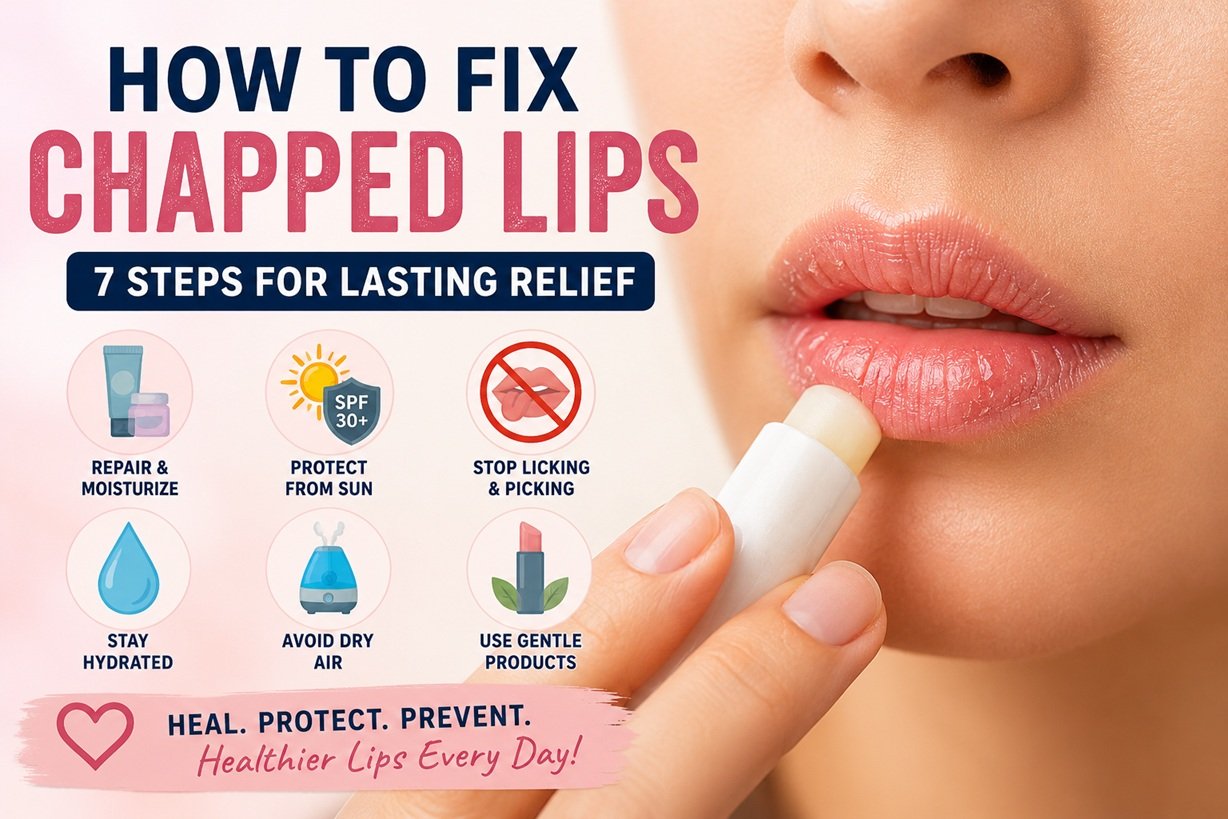
Dry, cracked, peeling lips can be uncomfortable, but most ordinary cases can be managed with a simple routine. If you’re wondering how to fix chapped lips, start by protecting the lip barrier: use a non-irritating balm or ointment, stop licking and picking your lips, avoid products that sting, and protect your lips from sun, cold, wind, and dry air.
The American Academy of Dermatology (AAD) recommends non-irritating lip products, frequent application of lip balm or ointment, SPF 30+ outdoors, avoiding lip licking and picking, and using a humidifier when appropriate.
Quick Answer: How to Fix Chapped Lips
For most uncomplicated chapped lips:
- Apply a fragrance-free, non-irritating lip balm or ointment several times a day.
- Use a thicker ointment such as white petroleum jelly when lips are very dry or cracked.
- Stop licking, biting, picking, and peeling your lips.
- Avoid lip products that burn, sting, or tingle.
- Protect your lips outdoors with SPF 30+ lip protection.
- Reduce exposure to dry air, wind, and other triggers.
- Get medical advice if your lips keep worsening or don’t improve after consistent home care.
AAD guidance indicates that chapped lips should generally show noticeable improvement within about two to three weeks when these measures are followed consistently.
What Causes Chapped Lips?
Chapped lips, sometimes referred to as cheilitis, occur when the lips become dry, irritated, cracked, or inflamed.
Unlike many other areas of skin, the lips don’t contain oil glands, which makes them particularly vulnerable to drying. Cleveland Clinic lists common triggers including cold or dry weather, sun exposure, frequent lip licking, dehydration, and reactions to lip products or other substances.
Common triggers include:
- Cold, dry, or windy weather
- Sun exposure
- Dry indoor air
- Frequently licking the lips
- Picking or biting peeling skin
- Dehydration
- Fragranced or flavored lip products
- Ingredients that irritate sensitive lips
- Certain allergies, medications, or health conditions
The best treatment therefore isn’t simply applying more lip balm. Finding and removing whatever is repeatedly irritating your lips is also important.
1. Repair Your Lip Barrier
The first step in learning how to fix chapped lips is giving damaged lip skin a chance to recover.
Apply a bland, fragrance-free lip balm or ointment several times throughout the day and again before going to sleep.
If your lips are severely dry or cracked, consider a thicker ointment such as white petroleum jelly. The AAD notes that ointments can seal in water longer than waxes or oils.
Simple barrier-repair routine
Morning: Apply a non-irritating lip protectant after washing your face.
During the day: Reapply whenever your lips begin feeling dry or tight and after eating or drinking if the protective layer has worn away.
Before bed: Apply a thicker layer of ointment to keep your lips protected overnight.
Don’t wait until your lips become painfully cracked before applying your protectant. Regular application can help maintain the barrier while damaged skin heals.
2. Choose the Right Lip Balm or Ointment
Not every lip balm is suitable for already irritated lips.
The goal is to choose something protective rather than stimulating.
According to dermatologists at the AAD, potentially helpful ingredients include petrolatum, white petroleum jelly, ceramides, dimethicone, mineral oil, castor seed oil, shea butter, and certain sun-protective ingredients.
| Ingredient | Why It May Help |
| Petrolatum / white petroleum jelly | Creates a thick protective barrier and helps seal in water |
| Ceramides | Support the skin barrier |
| Dimethicone | Provides barrier support |
| Mineral oil | Acts as an emollient |
| Castor seed oil | Commonly used in non-irritating lip products |
| Shea butter | Helps soften and protect dry lips |
| Zinc oxide / titanium dioxide | Can provide mineral UV protection in SPF lip products |
Look for products labeled fragrance-free and hypoallergenic when possible.
Is petroleum jelly good for chapped lips?
Yes. Petroleum jelly can be particularly useful when lips are very dry or cracked because it forms an occlusive layer that reduces water loss.
The AAD specifically includes petroleum jelly among its recommended options for relieving dry skin, including dry lips.
3. Stop Licking, Picking, and Peeling Your Lips
Lip licking is one of the easiest ways to keep the chapping cycle going.
Licking dry lips may temporarily make them feel better, but as the saliva evaporates, the lips can become even drier. Repeated licking also continually exposes already irritated skin to saliva.
AAD dermatologists therefore recommend avoiding licking, biting, and picking at chapped lips.
What should you do instead?
When you feel the urge to lick your lips, apply your non-irritating lip balm or ointment.
You should also avoid:
- Pulling loose skin off with your fingers
- Biting peeling areas
- Scrubbing your lips
- Using harsh lip exfoliators
- Brushing flaky skin away
Peeling skin may be annoying, but forcibly removing it can create new cracks and delay recovery.
4. Protect Chapped Lips From the Sun, Wind, and Cold
Environmental exposure can repeatedly damage lips even when you’re using a good moisturizer.
Use SPF on your lips
Choose an appropriate SPF 30 or higher lip product before going outdoors.
AAD guidance recommends SPF 30+ for chapped lips and reapplication approximately every two hours while outdoors.
Sun protection isn’t only important during summer.
UV exposure can affect your lips throughout the year, including winter.
Protect against cold and wind
Cold temperatures, low humidity, and wind can increase dryness.
When conditions are harsh:
- Apply lip protectant before leaving home.
- Reapply when the protective layer wears away.
- Consider covering your mouth from harsh wind and cold.
- Continue using sun protection.
The NHS also identifies cold weather, dry air, wind, and sun damage among common causes of sore or dry lips.
5. Avoid Ingredients That Irritate Chapped Lips
A lip balm that tingles isn’t necessarily “working.”
Burning, stinging, or tingling can be a sign that the product is irritating already damaged lips. If a product consistently causes these sensations, stop using it.
AAD dermatologists identify several ingredients that can irritate chapped lips, including:
- Camphor
- Eucalyptus
- Menthol
- Fragrance
- Cinnamon flavoring
- Citrus flavoring
- Mint and peppermint flavoring
- Salicylic acid
- Phenol
You don’t need the strongest-feeling product. You need one your lips tolerate comfortably.
What about flavored lip balm?
Strongly flavored or fragranced products may irritate some people’s already chapped lips.
Switching temporarily to a bland, fragrance-free product makes it easier to determine whether your regular lip products are contributing to the problem.
6. Control the Triggers Keeping Your Lips Chapped
If your lips repeatedly improve and then become dry again, look beyond the balm itself.
Dry indoor air
Indoor heating and air conditioning can reduce humidity.
A humidifier may be helpful when indoor air is particularly dry. A bedroom humidifier may be especially useful for people who notice significant overnight dryness or who breathe through their mouth while sleeping.
The AAD includes using a humidifier among its recommendations for managing dry, chapped lips.
Hydration
Drinking adequate water supports normal hydration, and dehydration can contribute to dry lips. Cleveland Clinic includes dehydration among the potential causes of chapped lips.
However, drinking water alone won’t necessarily repair chapped lips if wind, UV exposure, lip licking, or an irritating product keeps disrupting the surface.
Think of hydration and barrier protection as complementary measures rather than substitutes for each other.
Irritating products
If your chapped lips began after introducing a new lipstick, balm, toothpaste, cosmetic, or skin-care product around your mouth, consider whether contact irritation could be contributing.
Stop newly introduced lip products that cause discomfort and use a simple routine until your lips settle.
Foods that sting cracked lips
Salty, spicy, and acidic foods may sting severely cracked lips.
If a particular food causes pain while your lips are healing, temporarily limiting that trigger can make the recovery period more comfortable.
7. Know When to See a Doctor
Most ordinary chapped lips can be treated at home, but persistent lip problems shouldn’t automatically be assumed to be simple dryness.
Cleveland Clinic notes that several forms of cheilitis exist, including contact, angular, actinic, drug-induced, eczematous, and infective forms.
Arrange an assessment with a qualified healthcare professional if your lips:
- Keep getting worse despite appropriate care
- Don’t improve after about two to three weeks of consistent self-care
- Bleed frequently
- Become markedly swollen
- Develop persistent sores
- Become increasingly painful
- Repeatedly return despite avoiding likely triggers
AAD guidance similarly recommends seeing a dermatologist when chapped lips don’t improve after two to three weeks of appropriate self-care.
Seek medical advice sooner if you have symptoms that concern you or signs that could indicate infection.
The NHS specifically advises seeing a GP when lips are hot, painful, and swollen because this can indicate infection.
Persistent sun-damaged lips deserve attention
A persistently dry or scaly area on the lip isn’t always ordinary chapping.
Long-term UV exposure can cause actinic cheilitis, a precancerous lip condition. Cleveland Clinic describes it as a condition related to repeated long-term UV exposure that can make lips persistently chapped, cracked, crusty, dry, or scaly.
Don’t try to diagnose persistent lip changes yourself. Have them assessed by a healthcare professional.
A Simple Daily Routine for Chapped Lips
You don’t need a complicated collection of lip-care products.
Morning
Apply a bland, non-irritating lip balm or ointment.
If you’re going outdoors, use appropriate SPF 30+ lip protection.
During the Day
Keep your lip protectant somewhere accessible.
Reapply:
- When lips begin feeling dry
- When the protective layer wears away
- After eating or drinking when needed
- Before prolonged exposure to wind or cold
Outdoors
Use SPF 30+ lip protection and reapply about every two hours during continued outdoor exposure, following the product’s directions and reapplying as appropriate after activities such as eating or swimming.
Before Bed
Apply a generous layer of a simple ointment.
This is especially useful if your lips tend to feel particularly dry overnight or when you wake up.
Common Mistakes That Can Make Chapped Lips Worse
Exfoliating cracked lips
Don’t exfoliate actively cracked, painful, or inflamed lips.
Scrubbing removes peeling skin mechanically but doesn’t address the damaged barrier underneath and may cause further irritation.
Pulling off loose skin
Picking or biting flaky skin can interfere with healing. Both AAD and NHS guidance recommend avoiding these habits.
Using a balm because it tingles
A tingling sensation isn’t proof that a product is healing your lips.
If it burns or stings, discontinue it.
Applying lip balm only once
Barrier products wear away throughout the day. Reapply your chosen non-irritating product as needed.
Ignoring sun protection
Your lips need UV protection too. Use SPF lip protection outdoors even when the weather isn’t hot.
How Long Do Chapped Lips Take to Heal?
Recovery time depends on how irritated or damaged the lips are and whether the underlying trigger has been removed.
The American Academy of Dermatology says following recommended chapped-lip care should produce noticeable improvement within two to three weeks. If that doesn’t happen, it recommends seeing a board-certified dermatologist.
Cleveland Clinic likewise notes that severely chapped lips may take approximately two to three weeks to recover completely.
Mild dryness may feel better sooner, particularly when treatment begins early.
How to Prevent Chapped Lips From Coming Back
Once your lips improve, prevention is usually easier than repeatedly repairing severe cracks.
Keep the routine simple:
- Apply lip protectant when dryness first appears.
- Use an ointment before bed if you’re prone to overnight dryness.
- Keep lip balm somewhere convenient.
- Use SPF 30+ lip protection outdoors.
- Avoid products that previously caused burning or stinging.
- Don’t lick, bite, or pick your lips.
- Use a humidifier when dry indoor air is a recurring problem.
- Protect your lips from harsh wind and cold.
The key to preventing recurrent chapped lips is early barrier protection plus trigger control.
Frequently Asked Questions
How can I fix chapped lips fast?
Start immediately with a non-irritating balm or ointment, stop licking and picking your lips, avoid products that sting, and use SPF 30+ outdoors. Very dry lips may benefit from a thicker ointment such as white petroleum jelly.
Is Vaseline or petroleum jelly good for chapped lips?
Plain petroleum jelly can help protect dry lips by forming an occlusive layer that reduces water loss. The AAD specifically recommends white petroleum jelly as an option for very dry and cracked lips.
Should I exfoliate peeling lips?
Avoid scrubbing, picking, or peeling while your lips are cracked or inflamed. Instead, keep them protected with a non-irritating balm or ointment and allow loose skin to come away naturally.
Why does my lip balm make my lips sting?
Burning, stinging, or tingling can indicate irritation rather than healing. Stop using the product and switch to a bland, fragrance-free, hypoallergenic alternative.
Can licking your lips cause chapped lips?
Yes. Saliva provides temporary wetness, but repeated licking can leave the lips drier as saliva evaporates. AAD recommends applying a non-irritating balm instead when you notice the urge to lick your lips.
Should I use SPF lip balm in winter?
Yes. UV exposure still occurs during winter. The AAD recommends SPF 30+ lip protection outdoors, including during winter.
Why won’t my chapped lips heal?
Persistent chapping can have causes beyond ordinary dryness, including irritation or allergy, eczema, infection, medication effects, and chronic sun damage. A healthcare professional can determine the underlying cause when symptoms persist.
When should I see a doctor for chapped lips?
Seek professional advice when your lips worsen despite home care, don’t improve after about two to three weeks, frequently bleed, develop persistent sores, become markedly swollen, or become increasingly painful.
Final Takeaway
Learning how to fix chapped lips is mostly about breaking the irritation-and-dryness cycle.
Use a simple, non-irritating balm or ointment consistently, protect your lips with SPF outdoors, stop licking and picking, avoid irritating ingredients, and control environmental triggers such as dry air and wind.
You don’t need an aggressive treatment or complicated routine. Protect the barrier, remove the trigger, and give your lips time to recover.
If your lips don’t improve after consistent care or become increasingly painful, swollen, persistently scaly, or otherwise concerning, get them assessed rather than continuing to treat the problem as ordinary chapping.