
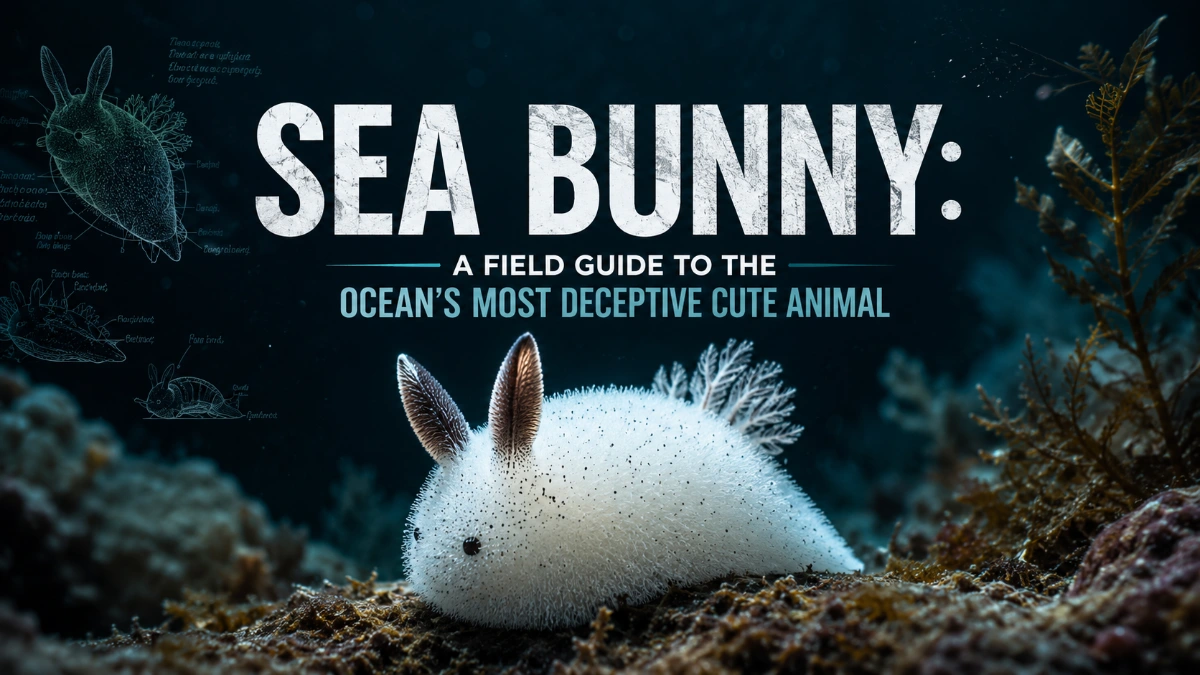
Sea Bunny Guide: Jorunna Parva Anatomy, Habitat & Toxicity
Picture a diver hovering a few feet above a coral reef, spotting something that looks like a tiny plush rabbit resting on the seabed. That reaction — disbelief, then curiosity — is essentially how the sea bunny built its reputation. The animal is Jorunna parva, a small nudibranch, and everything about how it looks, moves, and defends itself makes more sense once you understand what it actually is rather than what it resembles.
Identifying a Sea Bunny
At first glance, three details separate a sea bunny from anything else on a reef: its size, its texture, and its unmistakable “ears.”
Size and shape. Sea bunnies are small, generally under one inch or about 2.5 centimetres long, which means they’re frequently overlooked even by divers actively searching for them. Their body is soft, rounded, and entirely without a shell, a trait shared by every member of the order Nudibranchia.
The “fur.” The velvety covering on its back comes from tiny structures called caryophyllidia, not actual hair. They likely play a sensory or protective role, but structurally they have nothing in common with mammalian fur — no follicles, no keratin, no blood supply.
The “ears.” Two protrusions near the head are rhinophores, retractable chemoreceptor organs that detect chemical signals in the surrounding water. These aren’t decorative; they’re the sea bunny’s main way of sensing food, navigating, and finding mates, since it lacks complex vision.
Color is another identifying detail worth knowing before heading out to look for one. White sea bunnies dominate online photography, but yellow and orange individuals are actually the more common find in the wild.
Where Classification Places It
| Rank | Classification |
|---|---|
| Kingdom | Animalia |
| Phylum | Mollusca |
| Class | Gastropoda |
| Order | Nudibranchia |
| Family | Discodorididae |
| Genus | Jorunna |
| Species | Jorunna parva |
The species was first described in the 1930s by Japanese malacologist Kikutaro Baba, working from specimens collected in Kii Province, Japan. Baba was a prolific taxonomist who documented well over a hundred mollusk species during his career, and the sea bunny was one entry among many. Within its own genus, Jorunna parva is one of about sixteen recognized species, and it’s the only one whose texture and coloring combine to produce the rabbit-like look that made it famous. There’s also an open scientific question worth noting: some researchers suspect that what’s currently treated as a single species may eventually be reclassified as a group of closely related ones, given how much variation shows up across such a wide geographic range.
Field Notes: Habitat and Range
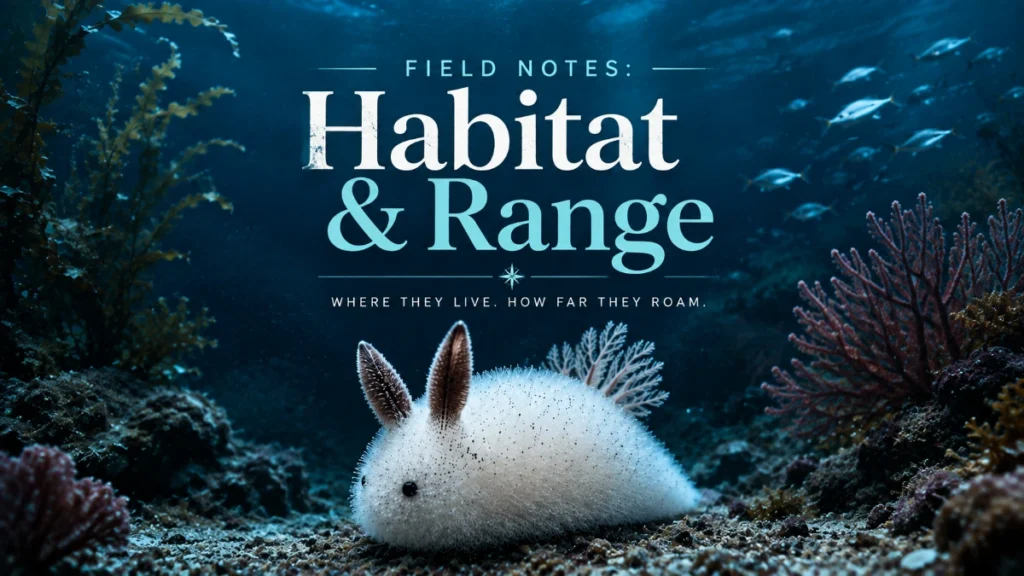
Sea bunnies are found only in the Indo-Pacific Ocean, a range that runs from Japan through Southeast Asia and into parts of the western Indian Ocean. Confirmed sightings span the Philippines, Indonesia, Papua New Guinea, Australia, Tanzania, Seychelles, Réunion, South Africa, Korea, and Palau.
Within that footprint, they favor coral reefs, rocky shorelines, and seaweed beds — specifically wherever sponge colonies are established, since sponges double as both food source and habitat anchor. That connection matters for anyone trying to spot one in person: dive sites across Japan, the Philippines, and Indonesia report frequent sightings, but the exact location within a given reef shifts depending on where sponges happen to be thriving that season. On the conservation side, the sea bunny isn’t listed on the IUCN Red List and its population appears stable, though like most reef-dependent invertebrates it likely faces some indirect exposure to coral degradation and climate-related habitat stress.
The Defence System Hiding Behind the Cuteness
Here’s where the sea bunny’s story turns from charming to genuinely interesting. It doesn’t produce its own venom. Instead, it practices toxin sequestration — eating toxic sponges and storing the sponge’s own chemical defenses in its body, later using that borrowed poison against predators.
One documented compound in this process is mycalolide B, which disrupts cell structure and has drawn separate scientific interest for potential use in cancer research. This explains a behavior that otherwise seems careless: sea bunnies move slowly and openly across exposed reef surfaces, seemingly indifferent to nearby predators. Most fish and larger animals have learned to avoid nudibranchs carrying these chemical defenses, which gives a soft, shell-less creature a level of protection its body alone couldn’t provide.
For humans, the risk profile is different. Direct contact with a sea bunny isn’t generally described as posing significant danger, though care and distance remain sensible around any wild marine animal.
Life Cycle: Diet, Growth, and Mating
A sea bunny’s life is compressed into a narrow window — typically a few months to about one year, a lifespan consistent with many nudibranchs that trade longevity for faster reproduction in a high-predation environment.
Its diet is narrow and specific: primarily sponges from the family Chalinidae, occasionally supplemented by algae or small invertebrates. That diet isn’t incidental — it’s the direct source of the toxins the animal later uses defensively, tying feeding behaviour and survival strategy into a single system.
Reproduction adds a layer of biological nuance that surprises a lot of readers. Sea bunnies are simultaneous hermaphrodites, producing both eggs and sperm at the same time, yet they still cannot fertilize their own eggs. Mating involves two individuals exchanging sperm mutually, so both partners fertilize eggs afterward. Once fertilized, sea bunnies deposit eggs in distinctive ribbon-shaped masses attached to the reef, a method common across nudibranch species generally.
Sea Bunnies Among Other Nudibranchs
Nudibranchs, as a category, are known for extreme visual diversity — some species appear frilled, ribbon-like, or brightly striped in ways that share no resemblance to any land animal. What makes the sea bunny distinct isn’t its underlying biology, since the shell-less body, rhinophores, and sponge-derived toxins are common across the group. It’s the specific combination of caryophyllidia texture and body colouring that produces its rabbit-like silhouette, a visual trait unique to this one species within its genus.
From Reef to Viral Sensation
The sea bunny’s path to fame began with photography, not scientific news. A handful of striking images circulated widely enough to reach mainstream outlets, and once major publications picked up the story, the animal moved quickly from a subject known mainly to divers and malacologists into something recognisable to a much broader audience.
That visibility carried it into pop culture too, including a reference in SpongeBob SquarePants, which helped lock in name recognition well outside diving and marine biology circles. What sustains interest years later isn’t just the initial cuteness factor — it’s the tension between that appearance and the animal’s genuinely toxic biology, a combination that few viral animals manage to pull off.
know more: Sea Bunny: Myth vs Reality Behind the Internet’s Favourite Sea Slug
Frequently Asked Questions
What exactly makes something a “sea bunny”?
It’s the common nickname for Jorunna parva, a nudibranch identified by its rabbit-like rhinophores (“ears”) and caryophyllidia (“fur”).
How can I tell a sea bunny apart from other nudibranchs?
Look for its small size (under 1 inch), soft velvety texture, and two upright rhinophores — a combination unique among its genus.
Is it safe to touch a sea bunny while diving?
Direct contact isn’t generally described as a serious risk to humans, but it’s best to observe without handling any wild marine animal.
Why does the sea bunny move so slowly without hiding from predators?
It carries sponge-derived toxins, including mycalolide B, that deter most predators, reducing its need to flee or hide.
What color are most sea bunnies in the wild?
Yellow and orange are more commonly observed than the white coloring seen in most viral photos.
Where is the best place to find a sea bunny while diving?
Dive sites in Japan, the Philippines, and Indonesia report frequent sightings, typically near coral reefs with active sponge colonies.
How long does a sea bunny actually live?
Typically a few months up to about one year.
Does a sea bunny need a mate to reproduce?
Yes. Despite being a simultaneous hermaphrodite, it cannot self-fertilize and must mate with another sea bunny.
Who first classified the sea bunny as a species?
Japanese malacologist Kikutaro Baba described it in the 1930s from specimens found in Kii Province, Japan.
Is the sea bunny population declining?
It’s not listed on the IUCN Red List, and current observations suggest a stable population, though reef habitat loss is a general concern for the species.