
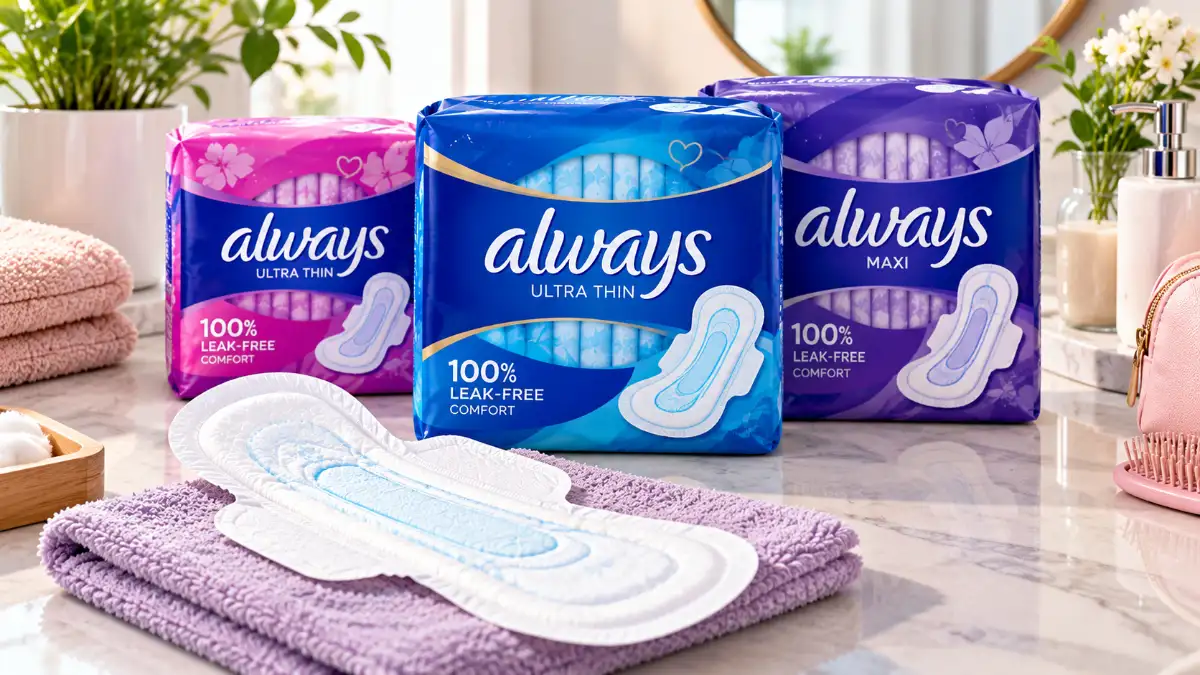
Always pads are worn inside underwear to absorb menstrual blood, with the adhesive side attached to the fabric and the absorbent surface facing your body. To use one correctly, place it where your menstrual flow normally reaches your underwear, secure the wings if your pad has them, and change it every few hours, or sooner if needed. Choosing the right coverage also matters, especially if you experience leaks during movement or while sleeping. With a few simple habits, using pads can become an uncomplicated part of managing your period.
How Do Always Pads Work?
A menstrual pad absorbs blood after it leaves the vagina. Unlike tampons or menstrual cups, pads stay outside your body.
Always makes several disposable pad styles, including thin, flexible, thicker, and overnight options.
Although their materials differ, the basic design is similar. An absorbent surface collects menstrual fluid, while the adhesive backing secures the pad to your underwear.
Some pads also include wings that fold around the fabric for additional stability.
The FDA’s menstrual-product guidance explains the differences between pads and other menstrual products and recommends following product instructions.
How to Put On Always Pads Correctly
Using a pad becomes straightforward once you know which side goes where.
Follow these steps:
- Wash your hands. Clean hands help maintain good hygiene when handling menstrual products.
- Remove the wrapper. Open the package and take out the unused pad.
- Expose the adhesive. Peel away the protective strip covering the sticky backing.
- Position the pad. Press the adhesive side onto the inside of your underwear, with the absorbent surface facing upward.
- Secure the wings. If your pad has wings, fold them around the underside of your underwear.
- Check the fit. Make sure the pad lies flat and covers the area where menstrual blood usually reaches your underwear.
A pad shouldn’t feel twisted, sharply folded, or excessively loose.
If it doesn’t sit comfortably, adjust the position before getting dressed.
How Often Should You Change Pads?
The right changing schedule depends on your menstrual flow.
According to the CDC’s menstrual hygiene recommendations, sanitary pads should be changed every few hours, even when bleeding is light. Change them more often during heavy flow.
Cleveland Clinic suggests changing a pad when it becomes damp and generally every four to six hours during the day.
These are practical guidelines rather than a requirement to wait until a particular hour.
Replace your pad sooner if it becomes saturated, starts leaking, shifts out of place, or feels uncomfortable.
Does Higher Absorbency Mean Fewer Changes?
A higher-absorbency pad may hold more fluid, but it doesn’t eliminate the need for regular changing.
Leaving a damp product against your skin for too long can contribute to irritation.
Follow the package instructions and pay attention to how quickly the pad becomes wet.
How to Prevent Always Pads From Leaking
Leaks can happen even when you’re using a reasonably absorbent product.
The cause isn’t always insufficient absorbency. Sometimes the pad simply doesn’t cover the area where menstrual fluid collects.
Check the Position
Notice where the blood lands on your used pad.
If most of it reaches the front edge, try positioning the next pad slightly farther forward.
If leaks occur at the back, a longer pad may provide better coverage.
The goal is to keep the absorbent area aligned with your flow.
Choose Secure Underwear
Underwear that fits properly can help keep a pad from moving.
Very loose fabric may allow the pad to fold or shift during walking, bending, or sitting.
Choose comfortable underwear that holds the pad in place without creating unnecessary pressure.
Use Wings When Helpful
Wings wrap around the underside of underwear, helping stabilize the pad.
They can be useful during exercise or when ordinary pads tend to move.
However, wings can’t prevent every leak, particularly when a pad is saturated.
Consider More Coverage
A longer pad may help if leaks occur near the front or back.
If the absorbent section fills quickly, look for a suitable higher-absorbency option and change pads as needed.
Can You Wear Always Pads Overnight?
Yes. Many Always products are specifically designed for nighttime use.
Overnight pads generally provide additional length and coverage to help manage changes in sleeping position.
Put on a fresh pad before bed and choose a size suitable for your flow.
Some products advertise extended protection, but that doesn’t mean every person can comfortably use one pad for the same number of hours.
Change it when you wake up, or earlier if necessary.
Repeatedly soaking through overnight pads may be a sign that your bleeding needs medical evaluation.
Why Does a Pad Sometimes Cause Irritation?
The vulvar area can be sensitive to moisture, rubbing, fragrance, and certain product materials.
If a pad causes discomfort, consider whether it fits properly or remains damp against your skin.
Changing products regularly and choosing unscented options may help.
The CDC advises avoiding scented menstrual hygiene products because they may irritate sensitive skin.
Persistent itching, burning, swelling, sores, or unusual discharge shouldn’t be dismissed as ordinary pad discomfort.
A healthcare professional can evaluate possible causes, including skin conditions and infections.
Can You Exercise While Wearing a Pad?
Yes. Menstrual pads can be worn during walking, running, stretching, and many other physical activities.
The main consideration is keeping the pad securely positioned as you move.
A pad with wings and appropriately fitting underwear may help reduce shifting.
After exercise, replace the pad if it becomes sweaty, saturated, or uncomfortable.
Swimming requires a different approach. Ordinary disposable pads absorb pool water and aren’t designed to work effectively while submerged.
Consider menstrual products specifically suitable for swimming instead.
How to Dispose of Used Always Pads
Disposable menstrual pads belong in the trash, not the toilet.
After removing the pad, fold or roll it inward and wrap it in toilet paper, tissue, or suitable packaging.
Place it in a waste bin.
Don’t flush disposable pads or their wrappers. They don’t disintegrate like toilet paper and can cause plumbing problems.
The CDC recommends proper disposal and handwashing before and after handling menstrual products.
At school, work, or public restrooms, use a designated sanitary-disposal bin when available.
When Is Heavy Menstrual Bleeding a Concern?
Occasionally needing a more absorbent pad doesn’t necessarily indicate a medical problem.
However, unusually heavy or prolonged bleeding deserves attention.
According to the CDC’s heavy menstrual bleeding guidance, warning signs include bleeding longer than seven days, frequently soaking through pads, or passing unusually large clots.
Heavy bleeding can sometimes contribute to iron-deficiency anemia.
Symptoms may include unusual fatigue, weakness, dizziness, or shortness of breath.
Speak with a healthcare professional if heavy periods repeatedly interrupt school, work, sleep, or other everyday activities.
Seek urgent medical attention for severe bleeding accompanied by fainting, significant dizziness, or other serious symptoms.
Simple Menstrual Hygiene Habits
Good menstrual hygiene doesn’t require complicated products or routines.
Wash your hands when changing menstrual products, replace pads regularly, and wear clean underwear.
The CDC recommends keeping the external genital area clean while avoiding internal vaginal cleansing.
The vagina cleans itself naturally, so douching isn’t necessary and can be harmful.
Keep spare pads in a clean, dry place. A small pouch with extra underwear can also be useful when you’re away from home.
Menstrual odor alone doesn’t mean you’re unclean. Regular changing and gentle external hygiene are generally sufficient.
Final Thoughts
Using Always pads comfortably comes down to proper positioning, suitable absorbency, and regular changes.
If leaks occur, check the pad’s placement and length before assuming you need the thickest available product.
Choose unscented options if fragrance bothers your skin, dispose of pads in the trash, and seek medical guidance for unusually heavy bleeding or persistent irritation.
- Read more: Always Pads
Frequently Asked Questions
Which side of an Always pad goes against my underwear?
The sticky adhesive side attaches to your underwear. The soft absorbent surface should face your body.
How often should I change an Always pad?
Change it every few hours, and sooner if it becomes wet or saturated. Heavier menstrual flow may require more frequent changes.
Why does my pad leak even when it isn’t full?
It may be positioned incorrectly, too short for your needs, or shifting during movement. Adjusting its position or using additional coverage may help.
Can I sleep while wearing an Always pad?
Yes. Overnight pads are designed for sleeping. Choose a suitable size, use a fresh pad before bed, and change it when necessary.
Do wings stop pads from moving?
Wings can help stabilize a pad by securing it around your underwear, but they don’t guarantee that shifting or leaks will never happen.
What should I do if my pad makes me itchy?
Try an unscented product, change damp pads promptly, and check for rubbing. Seek medical advice if the itching persists or other symptoms develop.
Can I flush an Always pad?
No. Wrap the used pad and place it in a trash bin. Flushing pads can block plumbing.
Can I exercise while wearing Always pads?
Yes. Choose a secure fit, consider wings if helpful, and change the pad after exercise if it becomes damp or uncomfortable.
When should I see a doctor about heavy bleeding?
Contact a healthcare professional if you regularly soak through pads very quickly, bleed longer than seven days, pass large clots, or experience significant weakness or dizziness.