
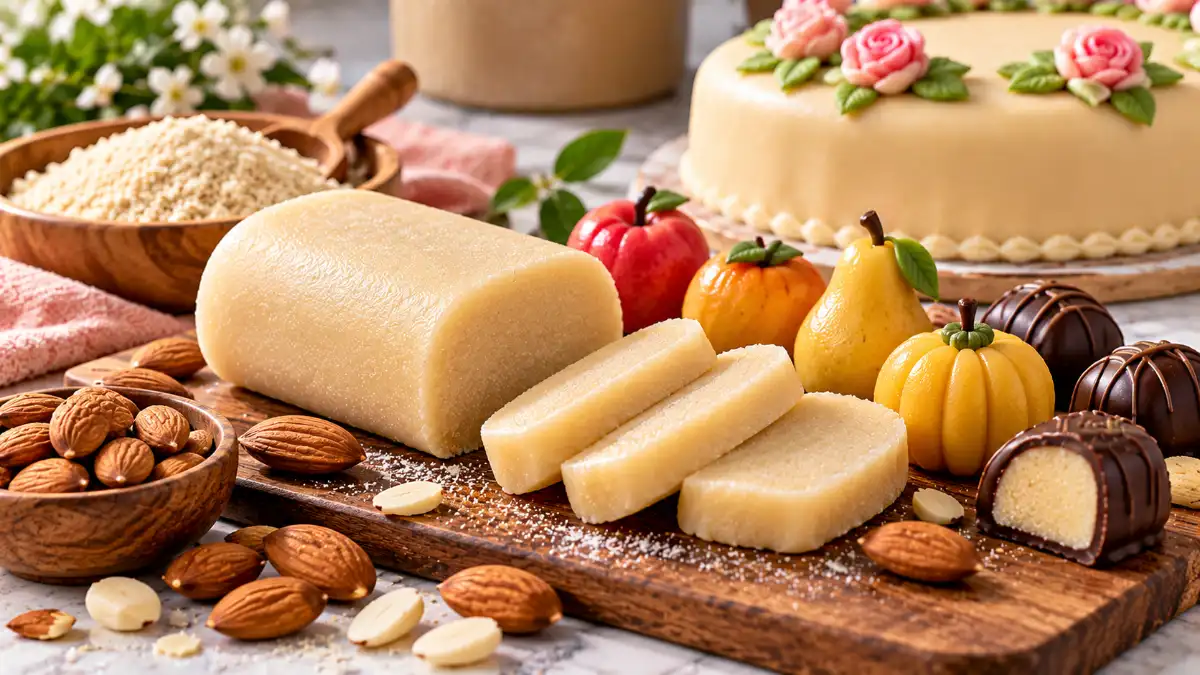
Marzipan is a sweet almond dough that you can roll over cakes, shape into edible decorations, tuck inside baked goods, or turn into candy. The easiest way to work with it is to knead a small amount until flexible, keep unused portions covered, and avoid adding too much moisture. It doesn’t require complicated equipment, but temperature and handling make a noticeable difference. If you’ve bought a package and aren’t sure what to do next, the following techniques will help you prepare, shape, and store this almond-based confection without unnecessary frustration.
1. Choose the Right Marzipan
Before buying this almond-based confection, consider what you plan to make.
For cake covering or detailed decorations, choose a smooth product specifically intended for molding or rolling. It should hold its shape without being excessively crumbly or sticky.
For baking, check the recipe before purchasing. Some pastries call for almond paste instead, which has a different balance of almonds and sugar.
Read the ingredient list, too. Commercial products vary in their almond content, sweetness, and added flavorings.
If you’re working with a tree-nut allergy in the household, remember that traditional recipes contain almonds.
2. Soften Marzipan Before Working With It
The almond dough may feel firm when you first remove it from the package, especially if it has been refrigerated.
Cut off the portion you need and allow the chilled mixture to become slightly more pliable, following its storage instructions.
Knead it gently using clean, dry hands.
You want a smooth consistency that bends without splitting. There is no need to knead it aggressively as you would bread dough.
Keep the remaining portion tightly wrapped. Leaving it uncovered while you prepare other ingredients can cause the surface to dry.
If the dough becomes unusually soft or oily from warm hands, allow it to firm before continuing.
3. Roll Marzipan Without Cracking
Rolling works best on a clean, smooth surface.
Begin with a flattened disk instead of a thick ball. Dust the worktop lightly with confectioners’ sugar if the paste sticks.
Roll from the center outward, turning the piece occasionally to maintain an even thickness.
Avoid stretching it by pulling on the edges. Thin areas are more likely to tear when transferred onto a cake.
For a large covering, measure the cake first. The sheet needs to accommodate the top and sides with a little extra for trimming.
If small cracks appear, stop rolling and gently knead the paste again.
Avoid adding excessive confectioners’ sugar, which can leave the dough overly dry.
4. Cover a Cake With Almonds
A smooth almond covering gives certain cakes an attractive finish and pleasant nutty flavor.
Start with a completely cooled cake. Trim any obvious uneven areas before adding the covering.
Some traditional cake methods use a thin layer of warmed, strained apricot jam to help the almond layer adhere. Follow the particular cake recipe, since the appropriate adhesive and preparation vary.
Roll the dough into a sheet large enough to cover the cake.
Lift it carefully using a rolling pin or other suitable support, then position it over the center.
Smooth the top before working gradually down the sides. Avoid pulling tightly, particularly around corners.
Finally, trim the excess around the bottom.
Battenberg cake is a classic example of this technique. Unlike a frosted layer cake, its almond wrapping is part of the dessert’s familiar appearance and flavor.
5. Color Marzipan for Decorations
Food coloring transforms the plain almond mixture into flowers, fruits, leaves, and other decorative shapes.
Divide the paste into smaller portions before adding different colors.
Add a tiny amount of food coloring to one portion, fold the dough over it, and knead until the shade becomes even.
Gel coloring is convenient because it adds relatively little moisture.
For soft pastel colors, begin with the smallest practical amount. A strong shade can be difficult to lighten once the coloring has been incorporated.
King Arthur Baking also explains how coloring can be added during its cooked preparation, rather than after the mixture has formed.
When coloring already-prepared almond dough, work with small portions to avoid excessive handling.
6. Shape Almond Into Edible Figures
This traditional confection is particularly enjoyable for decorative work because it behaves somewhat like modeling clay.
You don’t need elaborate tools to make attractive shapes.
Simple Fruit Decorations
A small round piece can become an orange or apple. Use a food-safe tool to add dimples or shallow lines.
To create a pear, start with an oval and gently narrow one end.
For a lemon, shape the dough into an elongated oval and pinch the ends slightly.
Use food-safe coloring or edible decoration materials for the finishing details.
Food Network’s marzipan decorations recipe demonstrates basic kneading, coloring, and shaping techniques.
For beginners, small fruits are usually easier than figures with many delicate parts.
7. Use Almond in Baking
This sweet almond mixture works in certain breads, pastries, and cakes, not just as decoration.
German stollen is a good example.
Some versions contain a log of almond confection enclosed inside the dough. As the bread bakes, the center remains rich and sweet.
King Arthur Baking’s Christmas stollen recipe gives specific directions for shaping the filling and enclosing it before baking.
The sweet paste may also appear in cakes and pastries when the recipe is designed for its particular sweetness and consistency.
However, don’t replace almond paste automatically. The substitution can affect moisture, texture, and overall sweetness.
8. Make Simple Marzipan Candy
You can turn the prepared almond dough into small candies without baking.
Cut it into neat squares, roll it into balls, or shape it into bite-sized pieces.
For chocolate-covered candies, use properly melted chocolate and follow an appropriate dipping method. Allow the coating to set under suitable conditions before packaging.
Dark chocolate creates a pleasant contrast with the sweetness of almonds.
Other possible flavor combinations include citrus zest, chopped pistachios, or complementary edible decorations.
If using a homemade preparation, make sure its ingredients and cooking method are suitable for eating without further heating.
9. Store Marzipan Correctly
Proper storage helps prevent this almond-based confection from drying out or deteriorating.
For unopened commercial products, follow the manufacturer’s instructions.
Once opened, wrap unused portions tightly and use an airtight container when appropriate.
Homemade versions need recipe-specific handling.
King Arthur Baking states that its cooked homemade marzipan can be refrigerated, tightly wrapped, for up to two months. That guidance applies to its tested preparation, not every homemade version.
Recipes containing raw or insufficiently cooked eggs require particular care. The FDA recommends pasteurized eggs or egg products for dishes served with raw or undercooked eggs.
Don’t assume an unfamiliar homemade batch has the same shelf life as a commercial product.
Common Marzipan Problems and Easy Fixes
Too Sticky
Warmth or excess moisture may cause stickiness. Let the paste firm slightly and use a small amount of confectioners’ sugar if needed.
Too Dry
Gently knead the mixture to restore flexibility. If it continues to crumble, follow the product’s instructions rather than adding an arbitrary amount of liquid.
Uneven Coloring
Keep kneading until the streaks disappear. Introduce color gradually to avoid over-darkening.
Decorations Losing Shape
The almond dough may be too warm. Allowing it to firm before adding delicate details often helps.
- Read more: Marzipan
Frequently Asked Questions
Do I need to cook store-bought marzipan?
Usually not. Commercial Almond paste sold as ready-to-eat confectionery can generally be used straight from the package. Always check its instructions.
How do I stop Almond from sticking to my rolling pin?
Lightly dust the pin and work surface with confectioners’ sugar. Use only enough to prevent sticking, since excess sugar can dry the surface.
Can I color Almond with ordinary food coloring?
Yes. Food coloring can be kneaded into Almond paste. Gel coloring is often easier to control because it introduces less moisture than a large amount of liquid coloring.
How thick should Almond be for covering a cake?
The ideal thickness depends on the cake and decorating method. Aim for a consistent sheet thick enough to lift and smooth without tearing, following the cake recipe when it specifies measurements.
Can marzipan decorations be made in advance?
Yes, provided they are stored appropriately. Protect them from moisture, contamination, and conditions that could damage their shape, and follow the recipe’s storage guidance.
What should I do if marzipan starts cracking?
Stop stretching it and knead it gently. If it is cold or stiff, allowing it to become more pliable may help. Avoid over-dusting with sugar.
Can I bake Almond inside bread?
Yes. Some stollen recipes use it as a filling. Follow a recipe developed for that purpose rather than assuming every marzipan product behaves identically.
Can homemade Almond contain raw eggs?
Some recipes do. If the Almond will be eaten without adequate cooking, use pasteurized eggs or egg products, as recommended by the FDA, or choose a suitable egg-free recipe.
What is the easiest Almond decoration for beginners?
Small fruit shapes are a practical starting point. Balls, pears, and lemons require only basic shaping and a little food coloring.
Can I freeze Almond?
Freezing may be possible for some formulations, but results vary. Follow the manufacturer’s guidance or a tested recipe, wrap it carefully, and check its texture after thawing.