
goofy ahh: 7 Essential, Powerful Clues to Its Funny Meaning
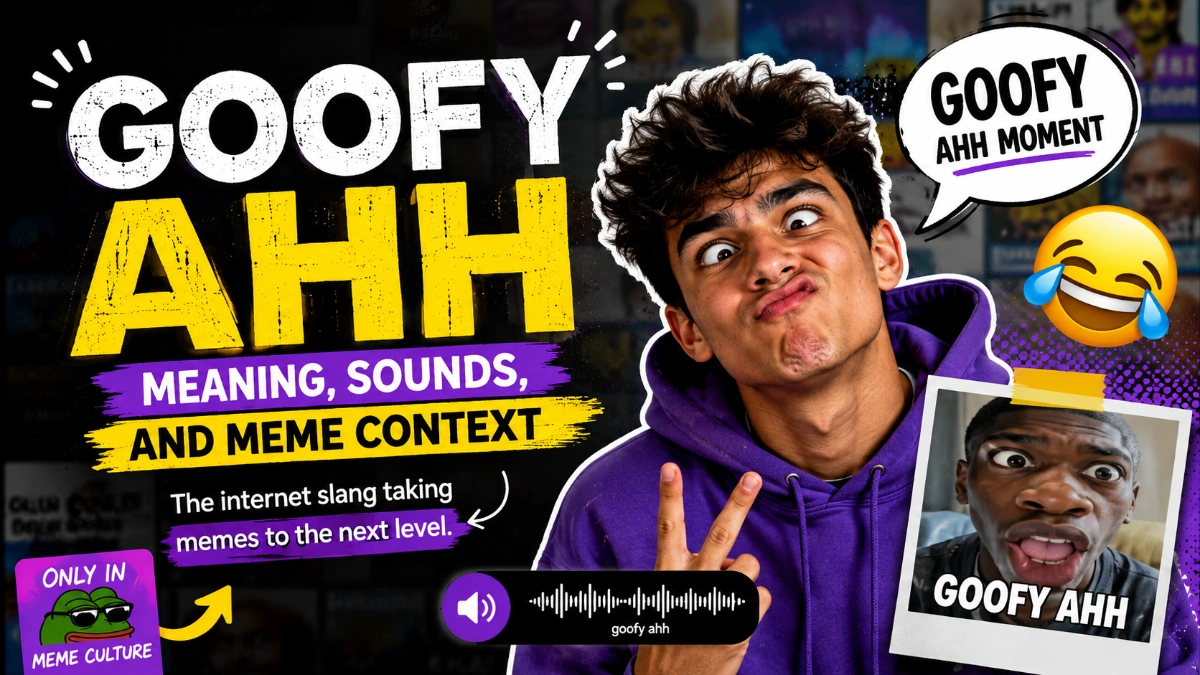
goofy ahh is an informal online phrase for something silly, absurd, or ridiculously over-the-top. People commonly use it for strange video edits, odd sound effects, distorted images, or harmless behaviour that looks too unserious to take seriously.
It is widely explained as a phonetic AAVE rendering of “goofy ass.” The expression existed online before its major TikTok-era visibility, so it is more accurate to describe TikTok as an important place where it spread—not as the phrase’s sole origin.
What does goofy ahh mean?
At its most basic, goofy ahh means “very goofy,” “ridiculous,” or “absurd in a funny way.”
It usually signals playful disbelief rather than a formal judgement. Someone might use it below an edit with an unnecessary dramatic zoom, an image with a bizarre fisheye effect, or a clip in which a normal moment is made ridiculous by the audio.
The target matters. Calling a harmless object, edit, or self-made mistake goofy ahh is usually a light reaction; directing it at a stranger can sound dismissive or mocking, depending on the setting.
Where the phrase comes from
goofy ahh is commonly described as a phonetic spelling of “goofy ass,” with the “ahh” spelling reflecting AAVE-influenced online usage.
Meme documentation records examples of the exact spelling on Twitter as early as 2009, but the person who coined it is not known. That distinction is important: an early recorded example is not proof of a single, definitive origin.
The phrase later reached a wider TikTok audience in late 2021. Remixes associated with creator and producer @proddadood used popular music alongside deliberately absurd sound effects, helping connect the phrase with a particular style of chaotic short-form humour.
Why goofy ahh became tied to sounds
A related expression, goofy ahh sound, became especially visible on TikTok in early 2022. It was often posted as a spam-style comment beneath videos using cartoon-like effects, strange vocal noises, or other intentionally ridiculous audio.
That label does not mean there is one official “goofy ahh” track. It is better understood as a loose description for audio chosen to make a clip feel more absurd.
A sound may earn the label when it does one of the following:
- Interrupts a serious-looking moment with a silly effect
- Uses exaggerated cartoon, reaction, or indiscernible noises
- Turns an ordinary edit into chaotic, deliberately low-stakes humour
This is why a search for goofy ahh can lead to many unrelated clips. The shared feature is the comic effect, not a single creator, song, or sound file.
How it works in videos and images
In a video, goofy ahh often describes the whole edit: awkward timing, a strange sound cue, an exaggerated reaction, or a visual choice that makes the clip feel intentionally unserious.
In an image post, it can describe distorted faces, extreme camera angles, obvious edits, or an object photographed in a way that makes it look unexpectedly dramatic. The phrase is a reaction to the absurdity of the presentation, not a technical category for every edited image.
That flexibility is part of the phrase’s appeal. Editorially, it works as compact shorthand for “this is so oddly put together that the weirdness becomes the joke.”
How to use goofy ahh in a caption
Use goofy ahh when the content already carries a clear, harmless joke. It works best as a reaction that adds tone, not as a replacement for context.
Original examples:
- “That entrance was serious until the goofy ahh sound kicked in.”
- “My camera found the most goofy ahh angle possible.”
- “Why does this chair look like it is about to give a speech? Goofy ahh setup.”
- “The edit had no reason to become this dramatic.”
These examples point at an edit, an object, or the writer’s own mishap. That approach is usually safer than using the phrase to mock someone’s appearance, identity, speech, disability, or a genuinely embarrassing moment.
When the joke stops working
goofy ahh can be playful among people who share the reference, but it can also become a cheap put-down when the person targeted is not part of the joke.
Avoid it when:
- The post concerns grief, injury, safety, or a personal disclosure
- The joke depends on someone’s vulnerability or appearance
- You are reposting an embarrassing clip without permission
- A serious critique would be more useful than a reaction meme
A practical rule is to ask whether the phrase makes the content funnier for everyone involved—or only creates a reaction at someone else’s expense.
Goofy ahh vs. goofy ahh sound
| Phrase | What it usually describes | Best way to understand it |
| goofy ahh | A silly situation, object, image, video, behaviour, or edit | A broad reaction to absurdity |
| goofy ahh sound | Odd, cartoon-like, exaggerated, or chaotic audio used in short-form humour | A loose sound-meme label, not one official audio track |
| “Goofy ahh pictures” | Visually bizarre, distorted, unusually framed, or obviously edited posts | Informal shorthand for absurd visual meme content |
Use the phrase with context
The phrase is short enough to work in a caption, comment, group chat, or video title, but its meaning still depends on the audience and target. It is usually strongest when it describes an edit or a situation that already looks intentionally ridiculous.
Knowing the expression’s AAVE context also helps avoid flattening it into a generic trend label. The most natural use is not copying a meme formula word for word; it is recognising why a particular sound, image, or moment feels absurd and responding in a way that fits the people involved.
Read more: Goofy Ahh: How the Meme Works Across Sounds, Videos, and Images
Frequently Asked Questions
It is informal and connected to “goofy ass,” so it may not fit professional, formal, or family-facing communication. Online, it is often used jokingly, but tone and audience still matter.
People often read it aloud roughly as “GOO-fee ah.” The exact delivery can vary by speaker, community, and context.
No. Recorded online examples of the exact wording date to at least 2009, while TikTok helped give it wider visibility in late 2021 and early 2022.
It is a loose meme label for deliberately strange, exaggerated, cartoon-like, or chaotic audio used to make a video funnier or more absurd.
No. The term describes a comic audio style and comment-meme usage, not one universally recognised sound file.
Yes, particularly for an absurd edit, an odd object, or a self-deprecating moment. Avoid using it to demean a stranger or turn a vulnerable situation into a joke.
The label is commonly used for bizarre visual posts, including distorted images, exaggerated camera angles, and obvious edits designed to look absurd.
It became a popular spam-style comment under TikTok clips with silly or cartoonish audio, especially during the early-2022 phase of the meme’s wider spread