
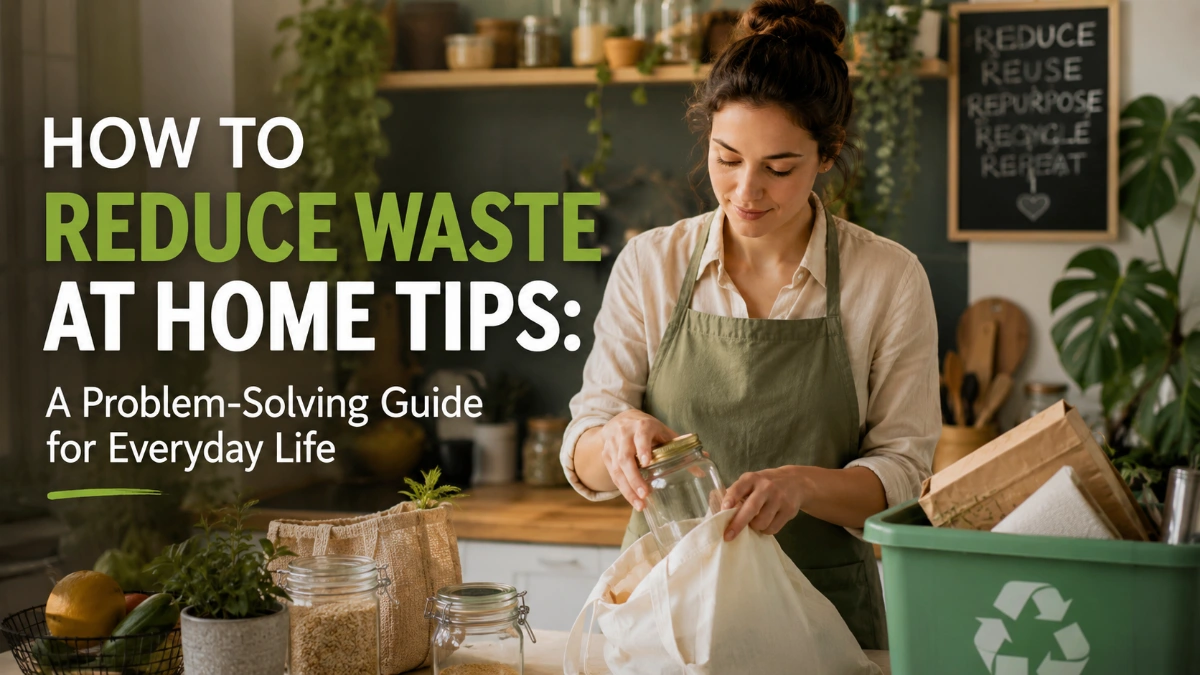
How to Reduce Waste at Home Tips: Practical Ways to Create Less Rubbish
Most household waste is created through everyday decisions about buying, using, storing, and discarding things. The best how to reduce waste at home tips help you prevent rubbish before it exists, rather than relying only on recycling afterward.
What Is Filling Your Bin?
A good waste-reduction plan starts with a simple question: what do you throw away most often? Spend one week noticing the contents of your general rubbish and recycling bins.
You may find that the main problem is spoiled food, packaging, paper, disposable products, or unwanted items. Once you know the pattern, you can choose a habit that tackles the cause instead of making random product swaps.
| Common Waste Problem | Practical Response |
| Food scraps and spoiled groceries | Plan meals, use older food first, freeze extras, compost suitable scraps |
| Plastic packaging | Choose loose, refillable, or minimally packaged products |
| Disposable cleaning and personal-care items | Move gradually to washable, refillable, or durable alternatives |
| Paper clutter and mail | Switch to digital records and reduce unwanted post |
| Usable but unwanted belongings | Repair, donate, sell, share, or repurpose before disposal |
Prevent Waste Before It Arrives
Waste prevention is the most effective starting point because an item that is never purchased does not need to be stored, sorted, recycled, or thrown away. Before buying something, pause and consider whether you need it, already own an alternative, or can borrow it.
Shop With a Clear Plan
A shopping list reduces impulse purchases and makes it easier to buy only what you can use. Check your kitchen, bathroom, and cleaning supplies before going to a shop, particularly when purchasing products that are easy to duplicate.
- Buy food and household products in amounts you can realistically use.
- Avoid unnecessary single-use items.
- Choose products with less packaging when comparable options are available.
- Bring reusable bags when shopping.
- Choose refillable water bottles and reusable food containers.
- Buy larger packs only when storage and regular use make sense.
Avoid Packaging at the Source
Packaging becomes waste as soon as it enters the home. Choosing loose fruit and vegetables, refill products, bar soap, and concentrated cleaners can reduce the number of containers you need to manage.
Do not replace usable items simply to make a lower-waste swap. Finish what you have first, then choose an alternative that fits your routine.
Stop Food Waste Before It Starts
Food waste often results from buying too much, forgetting what is stored, or not using ingredients in time. A small planning routine can reduce all three problems.
Use a First-In, First-Out System
FIFO means “first in, first out.” Keep older groceries at the front of the fridge, pantry, or freezer, and place new purchases behind them.
This makes it easier to see what needs to be used. A visible note on the fridge, clear containers, and one designated leftovers shelf can help prevent food from being forgotten.
- Plan meals around ingredients that need using soon.
- Check cupboards and the fridge before shopping.
- Freeze suitable leftovers or extra produce.
- Include leftover meals in your weekly plan.
- Use flexible recipes such as soups, curries, stir-fries, sauces, and smoothies.
Compost the Scraps You Cannot Use
Composting can turn suitable food scraps and yard trimmings into material that supports soil in gardens and potted plants. A basic compost setup needs a balance of moist “greens,” such as food scraps, and dry “browns,” such as leaves or uncoated cardboard, along with air and moisture.
- Collect fruit and vegetable scraps, coffee grounds, tea materials, and suitable garden waste.
- Add dry leaves, twigs, or plain cardboard to balance wetter materials.
- Keep compost damp but not waterlogged.
- Turn an outdoor compost pile occasionally to improve airflow.
- Follow the rules of your chosen system for meat, dairy, oils, and other restricted materials.
If composting at home is not possible, investigate food-waste collection, a community composting program, or a shared compost system.
Make Reuse the Default
Reusing means getting more value from an item before it is recycled or discarded. It can be as simple as filling the same water bottle, washing a storage container, or using cloths instead of disposable wipes.
Replace Single-Use Items Gradually
The goal is not to buy a new reusable version of everything. Use up what you own, then choose durable replacements only when needed.
- Use washable cloths for cleaning.
- Keep reusable bags near the door.
- Refill drinking bottles.
- Store leftovers in reusable containers.
- Use reusable dryer balls rather than disposable dryer sheets.
- Choose a reusable razor if it is suitable for you.
- Use bar soap, refillable dispensers, or refill packs when practical.
Reuse Paper and Packaging
Paper and delivery packaging can be useful before they are recycled. Reuse clean boxes for storage, use plain packing paper for future parcels, and write notes on the unused side of printed paper.
You can prevent paper clutter before it arrives by choosing digital bills and statements, requesting digital receipts, reducing unwanted catalogues, and printing only when a physical copy is necessary.
Keep Products Useful for Longer
Many household items are discarded because of small damage, a missing part, or a change in preference rather than because they are truly unusable. Repairing, maintaining, sharing, or passing items on can extend their useful life.
Repair, Share, and Buy Used
Before replacing an item, consider whether it can be fixed, borrowed, rented, or purchased secondhand. This is particularly helpful for clothing, books, tools, furniture, and occasional-use equipment.
- Sew a loose button or minor tear.
- Look for repair services for appliances, furniture, and electronics.
- Borrow tools or party supplies that you rarely use.
- Donate, sell, or give away items that are still in usable condition.
- Choose secondhand items when condition and safety are appropriate.
- Look for durable products with repairable or replaceable parts.
Repurpose With a Purpose
Repurposing works best when you have a real use for the item. A clean glass jar may hold dry food or household supplies, a worn cotton T-shirt can become a cleaning cloth, and a chipped cup can hold pens or a small plant.
Avoid saving every container “just in case.” Keeping only useful items prevents a low-waste effort from turning into clutter.
Treat Recycling as a Final Option
Recycling is valuable, but it is not a replacement for reducing, reusing, repairing, or composting. Accepted materials differ by local collection system, so local instructions should guide your choices.
Contaminated containers, food residue, and items that are not accepted can interfere with sorting and may lower the quality of recyclable materials. Avoid “wishcycling,” which means placing uncertain items in the recycling bin in the hope that they can be processed.
- Check local rules for paper, plastics, glass, metal, and cartons.
- Empty and clean containers as local guidance requires.
- Keep non-accepted materials out of household recycling.
- Use specialist drop-off points for batteries, electronics, chemicals, paint, and similar items.
- Put local recycling instructions near your bins.
Make the Low-Waste Choice Convenient
A habit lasts when it is easier to do than to forget. Place reusable shopping bags by the door, keep a running shopping list on your phone, move older food to the front, and put a food-scrap caddy where meals are prepared.
Choose one action from your bin check and keep it going until it feels automatic. Then add another. Reducing waste is not about creating a perfect home; it is about making practical choices that prevent rubbish, save useful resources, and help you use what you already have.
Read more: How to Reduce Waste at Home Tips: Simple Actions That Cut Household Rubbish
Frequently Asked Questions
Begin with the category that appears most often in your bin. For many homes, reusable shopping bags, meal planning, using older food first, and choosing less packaging are effective first actions.
Reducing comes first because it avoids creating waste. Reuse, repair, composting suitable organic material, and correct recycling can then help manage what remains.
Check what you already have before shopping, plan meals, use older food first, freeze suitable extras, save leftovers, and compost appropriate food scraps.
No. Use what you already own. Replace items with durable, refillable, or reusable versions only when the current item is finished or no longer usable.
Possibly. Depending on your space and local options, you might use a small compost bin, worm composting system, community composting service, or food-waste collection program.
Repair, donate, sell, share, or repurpose usable items before discarding them. If an item is beyond reuse, check local recycling or specialist collection options.
Buy loose produce, carry reusable bags, use refillable bottles and reusable containers, choose concentrates or refills, and avoid unnecessary single-use items.
Putting non-accepted or dirty materials into recycling can complicate sorting and contaminate recyclable materials. Check local guidance when you are unsure.
No. It can reduce packaging only when the item will be stored and used fully. Bulk buying that leads to spoilage or unused products creates more waste.